painting in chinese
chicken and egg, philosophy and paint, east and west
Trying Chinese painting for the first time was a very confusing experience. You barely touch the paper and ink diffuses immediately, making a huge blob where you expected a dot. What are you even supposed to do? After finding some landmarks, getting used to how the ink flows, contrast with Western tradition became even more salient. There is no way to hide your mistakes, every mark that is made is there, and will be present in the final result. A realization came down on me: this is what the Tao is all about. To achieve good results, you need a holistic harmony. Your arm should do the precise movement expected by the subject. Your brush should have the size required by what you are painting. It’s no wonder that the Enso is a traditional exercise in zen tradition.
Contrast that with the Western tradition, and all these limitations disappear. You can replace harmony with desperate obsession; in fact, not only would this work as well for the result, but the cultural context would label that as more “artist” behaviour. Even great artists would redo parts of a painting many times. I remember an example of a great artist struggling with a hand, who eventually covered it with drapery to hide it (I cannot remember this particular example, so if you know it, please let me know!)1.
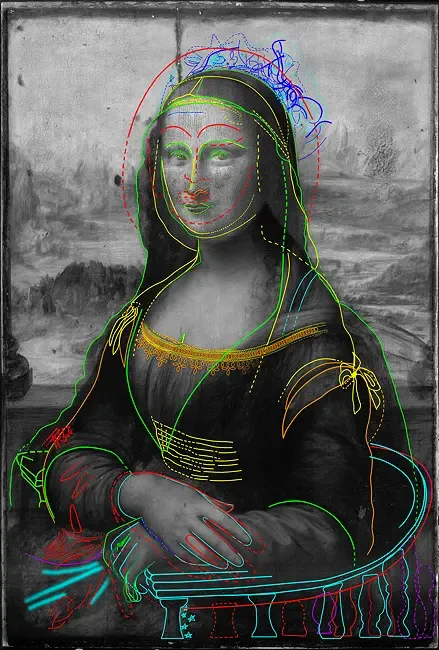
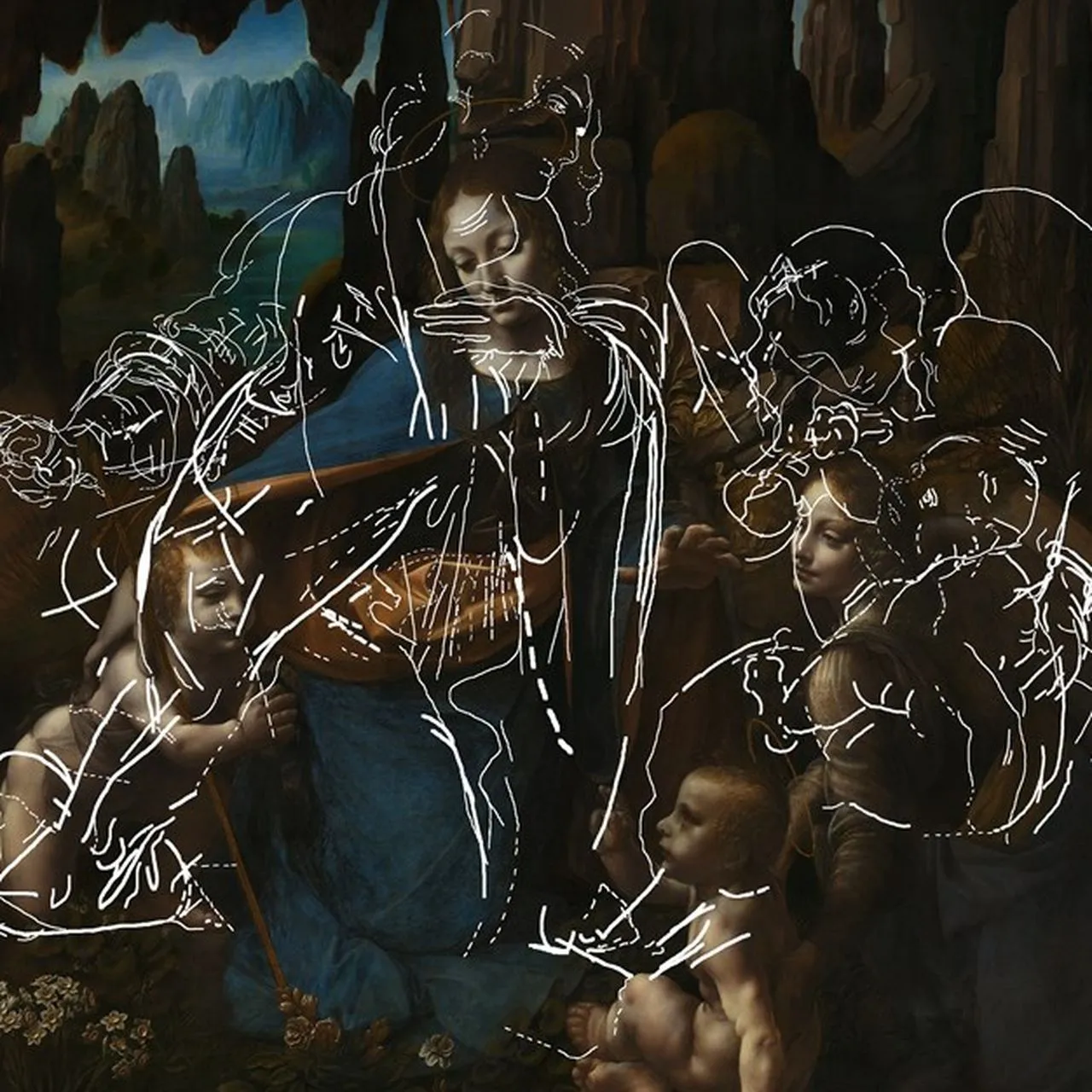
You can spend 10000 hours on a painting; in Chinese painting, you would rather get the 10000th painting.
In other words, there is a profound relationship between the artistic tradition and the philosophical approach to life. Different metaphysics, or weltanschauungen (worldviews), shape the way we approach art.
The Western decomposition
Western painting is closely related to the scientific method, and in particular reductionism. Perspective is pure geometry; compare that with the traditional naive arts. Modern color theory comes from Newton and Goethe, emphasizing the dual nature of a physical and a psychological aspect. Anatomy developed along with the science of the human body. Composition is far less of a science than a set of rules2, which are based in geometric principles.
Learning programs thus tend to follow a general program:
- perspective
- color
- anatomy
- composition
- line making
These aspects are fundamental and can thus be composed (or rejected) in a modular fashion.
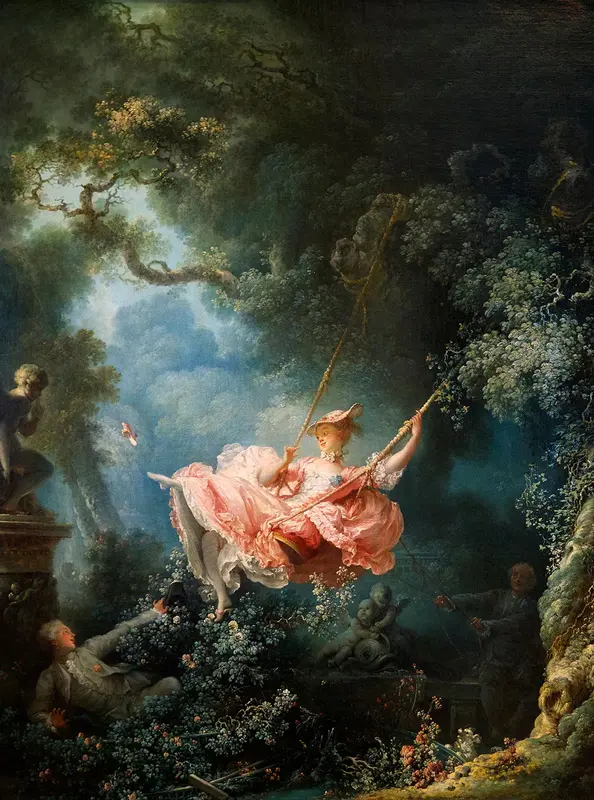
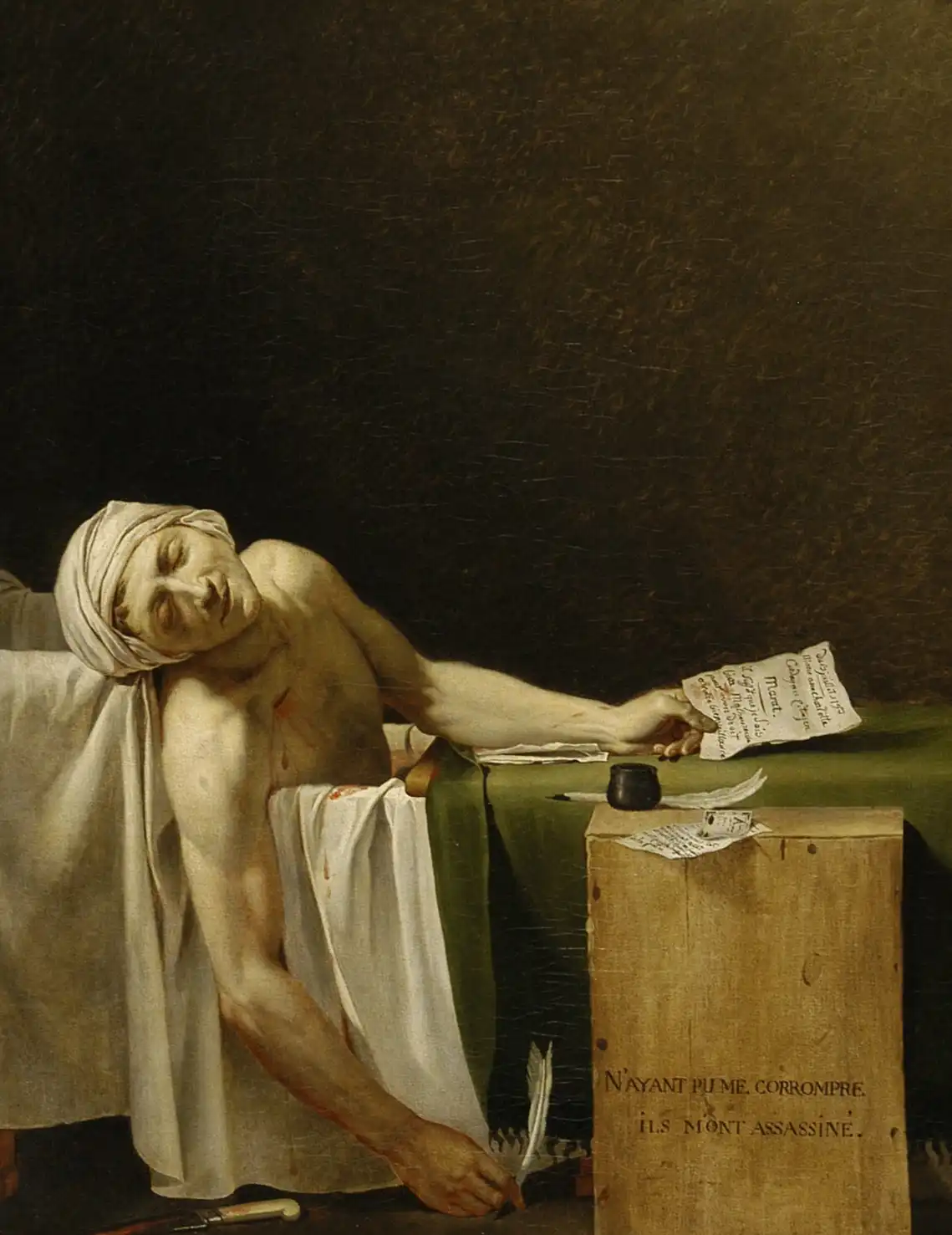
The historical development of art in Western tradition reflects the pattern of scientific revolutions. Artistic currents go in waves of standardization, pushing boundaries, then counterpoint once people felt the style degenerated into turgid clichés. The main example would be baroque followed by rococo that amplified the style, then neoclassicism that returned to a more austere style after an exhaustion of the fluffy extravagance. This follows the pattern of scientific revolutions. A new paradigm is exploited, extended until it doesn’t yield new results and a new one is needed, overturning the old3.
Continuity of history
By comparison, Chinese history is much more linear. This is a fact of history, language, and culture; respect for elders and tradition is very opposed to the tabula rasa approach of the revolutions discussed above. It does not mean that evolution stopped, but that most steps are recognizable.
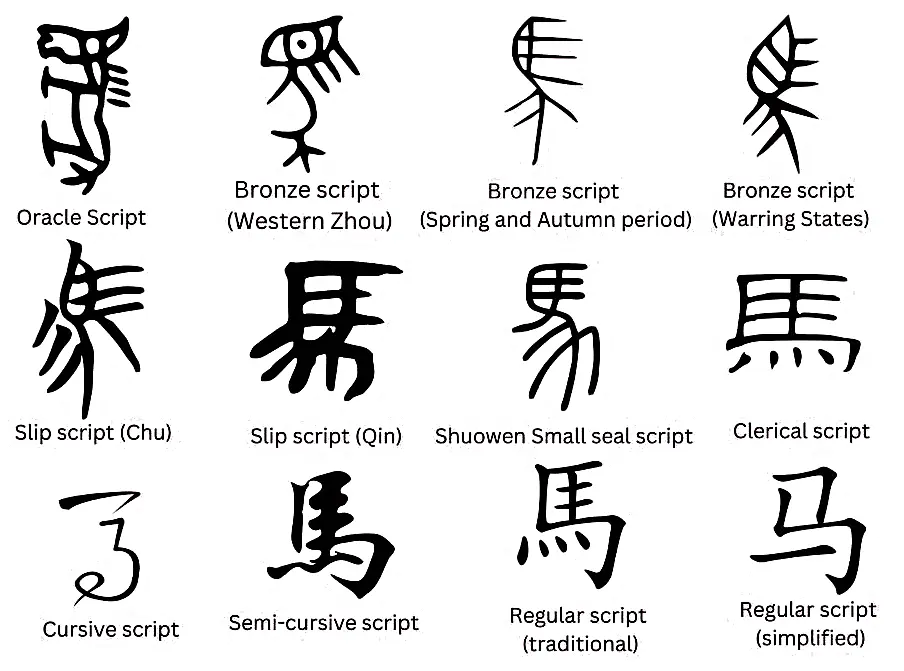
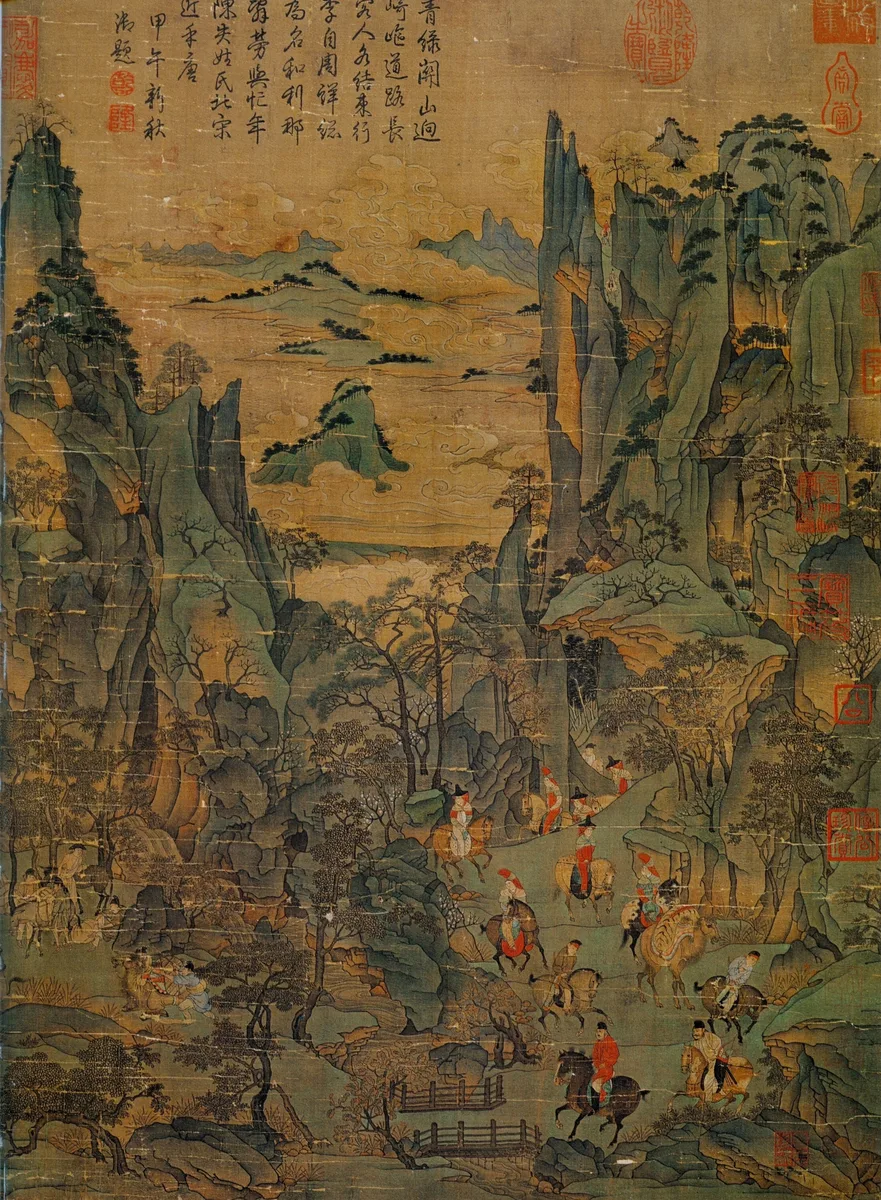
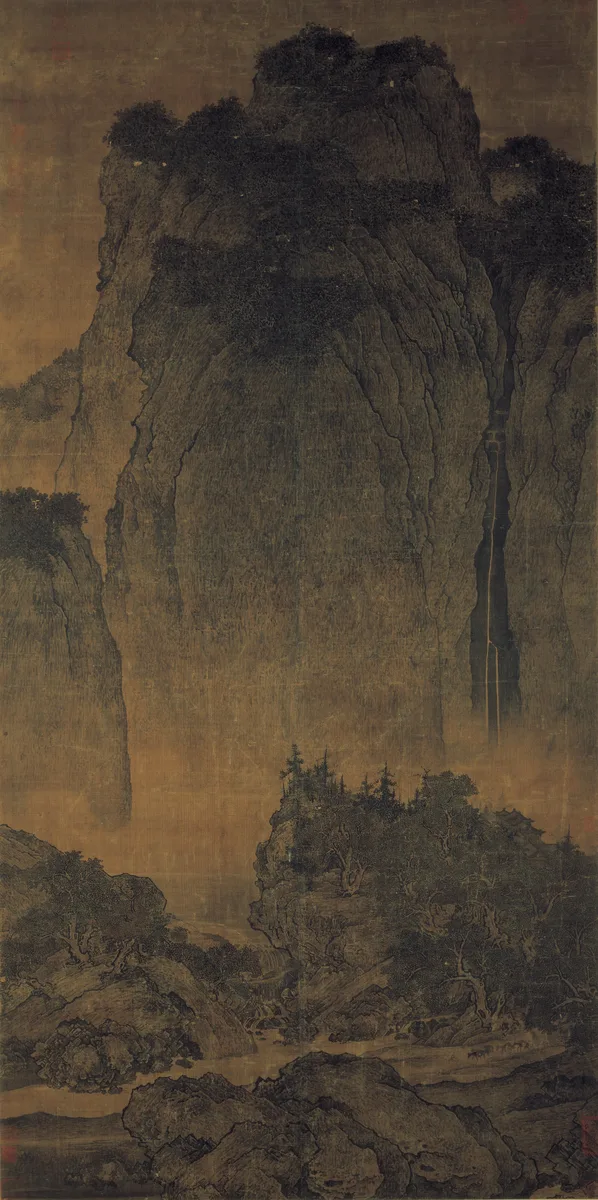
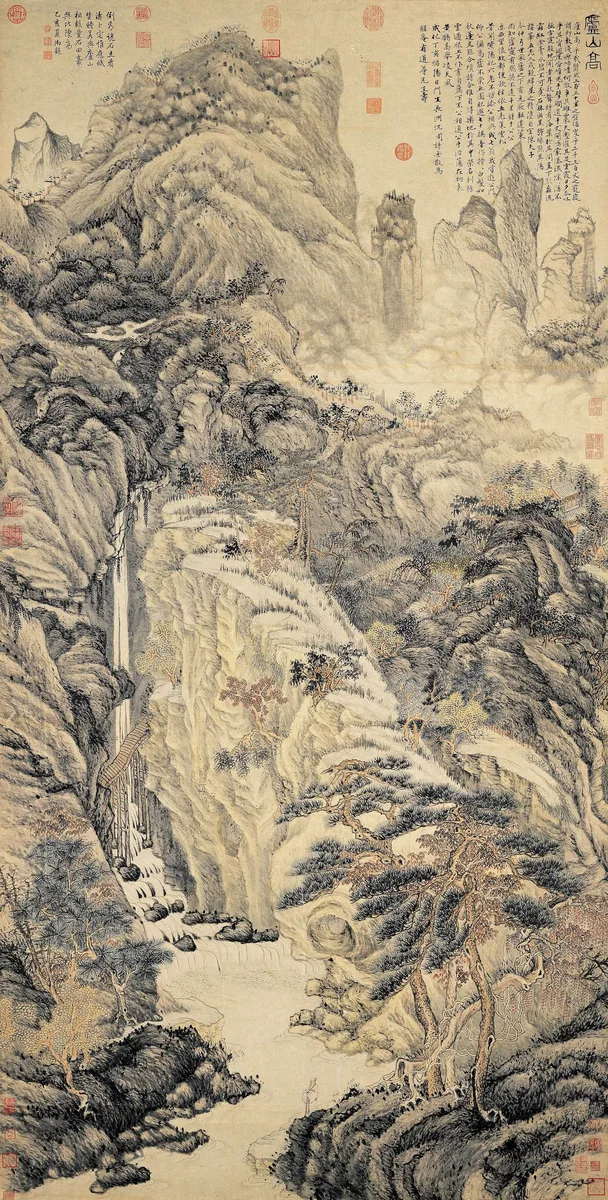
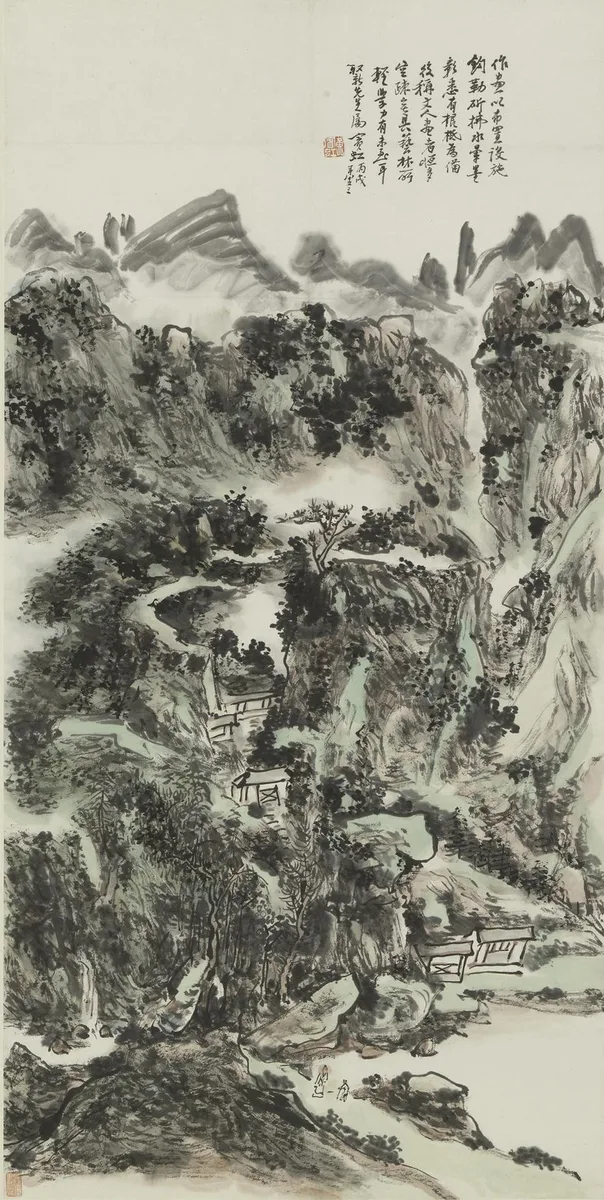
The legacy that has been seen as a burden in Western tradition has accumulated to millennia.
The Western mythos is dominated by “the genius”, spearheading the spirit of a new epoch, and thus above or unaffected by the conventional wisdom of the past. By contrast, the Chinese mythos emphasizes the legacy and carrying forward. As such, the respect for elders and tradition has been a constant in Chinese painting. Painting was integrated into the holistic system of the “four Arts of the Chinese scholar”, formally linking it to philosophy, calligraphy, and poetry. This means that the fundamental thread of Chinese painting development is the symbolic language coming in direct lineage to its primitive roots, and these roots can be found in some way in most parts of process and outcome.
Contrast
The scientific revolution placed a lot of emphasis on the physical origin of painting. Rather than the idea that copying physical reality is a poor facsimile of reality, or mere mockery, it means studying it in depth to push the boundaries of human knowledge and understanding against the most formidable force, the universe itself.
In contrast, the continuous evolution of Chinese painting means that it builds on the history of its symbolic language and techniques to render a certain interpretation of the world. Subjects, compositions, and techniques are all part of the symbolic language. Learning comes from master studies, and it’s only after the mastery of historical techniques that the artist can start to express their own ideas.
Like the yin and yang dots showing that even in yin there is a seed of yang, and vice versa, these two major tendencies are the dominant respective forces. Being faithful to reality is also part of Chinese painting, just as subjective interpretation is part of Western tradition.
Integration
The XXth century really introduced Western ideas into Chinese society, as the country was forced to modernize to keep up with the global competition. Western technology spread, and as the medium is the message, their conventions really seeped into Chinese practice.
New artists like Feng Zengxian or Huang Zhou introduced a style based on Western understanding yet adapted to the medium of Chinese painting.
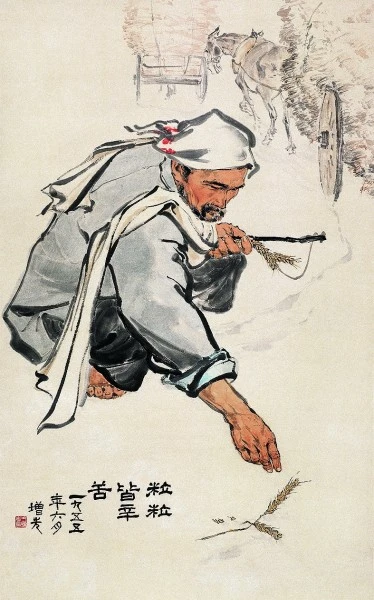
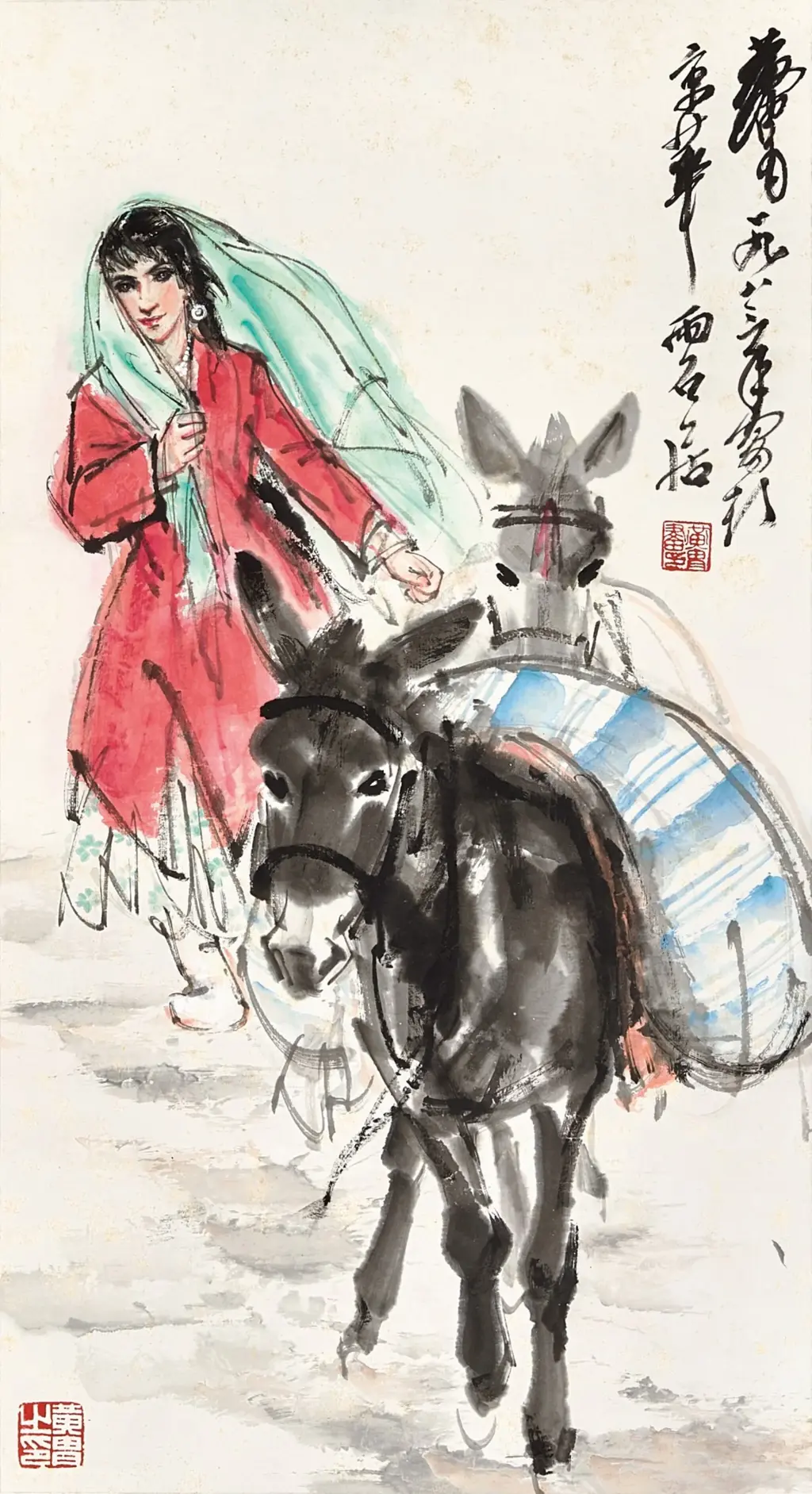
A Chinese artist put it this way: a Chinese painting is Western-influenced if it has “true light”. True light means that it is inferred from physical properties rather than the continuity of artistic symbolism.
Artists like Shi Guoliang follow that pattern. “Is it even Chinese painting anymore?” was a common point of view. From a Western perspective, I think it wouldn’t be a question; it’s simply “less stylized”.
Harmony versus mastery
The brain has a special love for some natural phenomena. Contemplate the beauty of nature; inks diffusing on paper, wave patterns, rock shapes, naturally feel beautiful to us. There is ample evidence that this is hard-wired in our brain, which picks up things like the fractal dimension of natural phenomena. The harmony of the brushstrokes gives a predominant role to the elements, and draws on the strong feeling of aesthetic beauty from nature.
Compare to mastery over the elements – the scientific dream, the Faustian bargain. Everything is subservient to human intent. A tree is shaped into a convenient form, even if it damages it badly. Beauty is achieved through enormous effort to bend nature to the path we chose.
Conceptual crossings
“It’s all Chinese” is a common expression to indicate how incomprehensible something might be; it’s more alien than aliens in science fiction might be. Searle’s Chinese room argument is a good example of this. To rephrase this gedankenexperiment, a person is locked in a room and only able to communicate in Chinese symbols without ever getting any outside information about their precise semantics. The person can successfully communicate in Chinese by learning the rules as a game, by trying different combinations and seeing what works4. The point is that even though he may communicate perfectly through this game, it shows it is not equivalent to any sort of understanding.
From a purely intellectual point of view, the two traditions are indeed incomparable. I struggled to understand many Chinese ideas, that I discovered years later to be due to a poor literal and conceptual translation of the originals.
Practice makes perfect
Because this general perception of Chinese painting is so physical, I never felt any of my attempts to communicate any of the revealing experiences I had could be successful. A lot of the points that I developed are post-hoc justifications of this understanding, that was purely an intuitive feeling coming from that initial shock. This is still the general principle that guides my practice, as that communication remains elusive.
Grey area
This can be attacked from the point of view of “overly broad generalization”. I’m generally talking about Xiěyì (写意, “to write the spirit”), which is the dominant form of Chinese painting; Gongbi (工筆, gōng bǐ) would correspond more to the Western approach. Conversely, gesture drawings are a minor form of Western art tradition that would correspond more closely to Xiěyì.
Most of what is written here is a general observation that might need more qualifiers to be true, but that would make the text very dense.
-
These are generally revealed via X-ray and chemical analysis, https://en.wikipedia.org/wiki/Pentimento ↩
-
in particular its approach to “leading the view” had been shown to be physiologically and experimentally false. However, composition “rules” are good guidelines that generally work. This is a common occurrence in the history of science. ↩
-
“none of this applies to Western contemporary art” is a reasonable rebuttal. But this notion of “art” did away with painting anyway, so this does not matter one bit. In other words, we don’t care about the Western art decomposition. ↩
-
going a bit further, let’s say, a probability distribution over sentences computed conditionally on input sentences… maybe something good could come out of this idea? ↩